DIGITAL MANUFACTURING
Every platform
is one of a kind
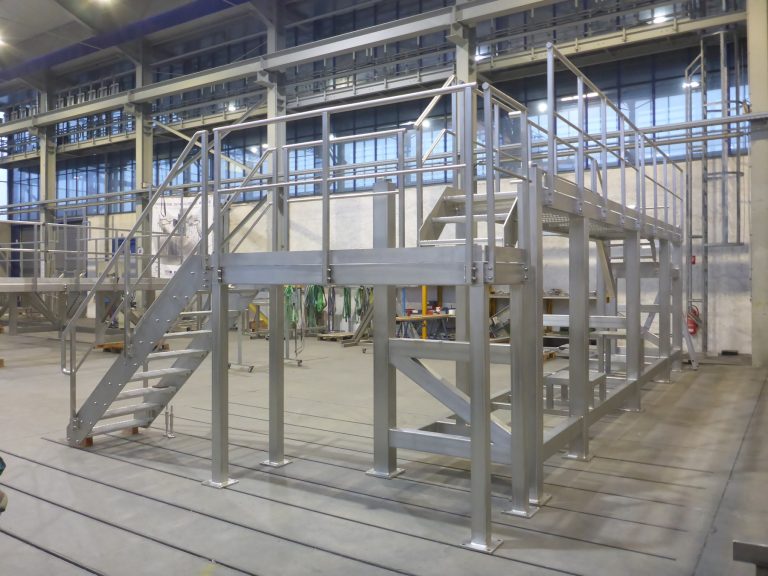
We automate the work that repeats. Robotic welding helps us make recurring parts for custom stainless steel platforms.
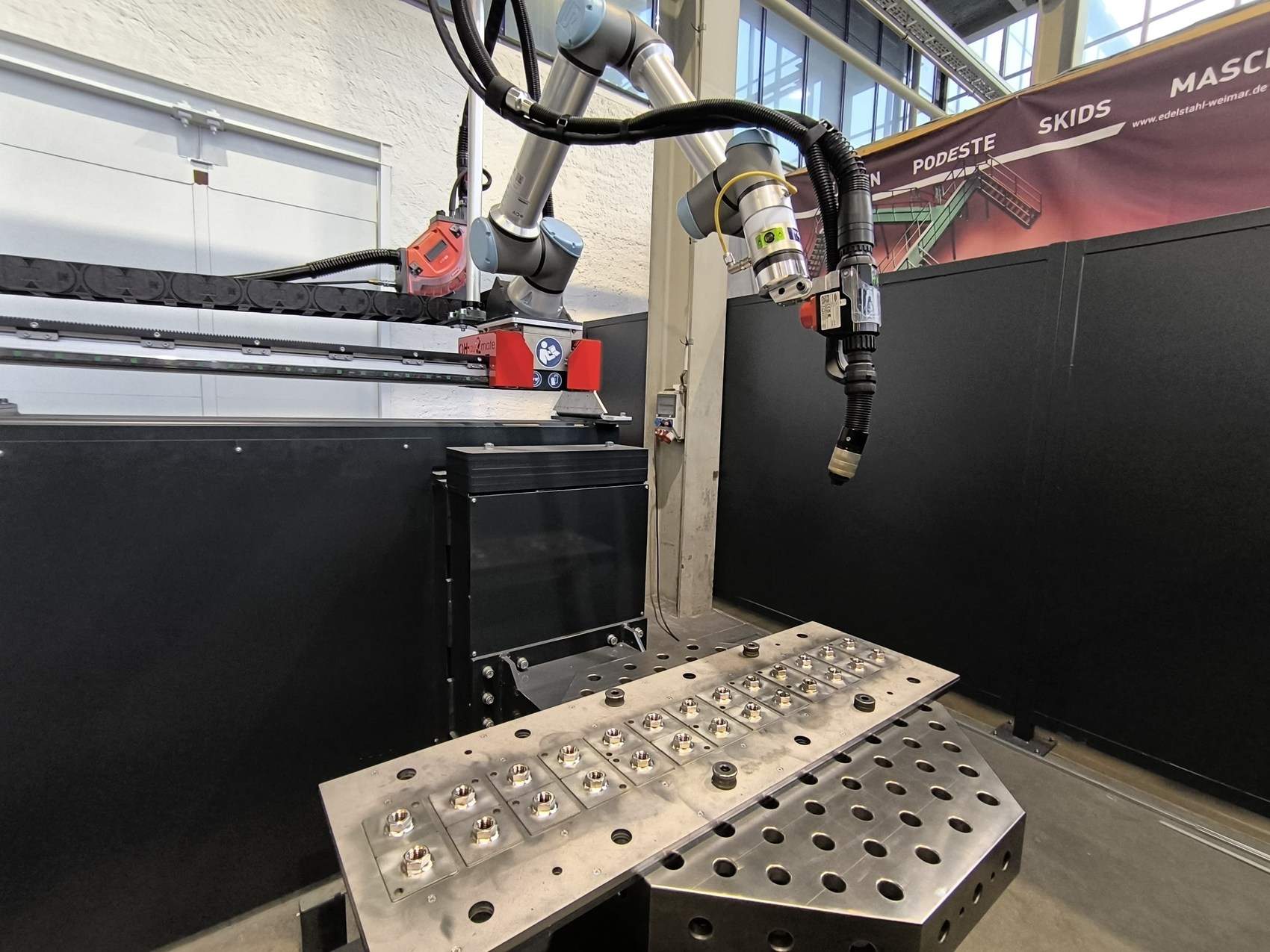
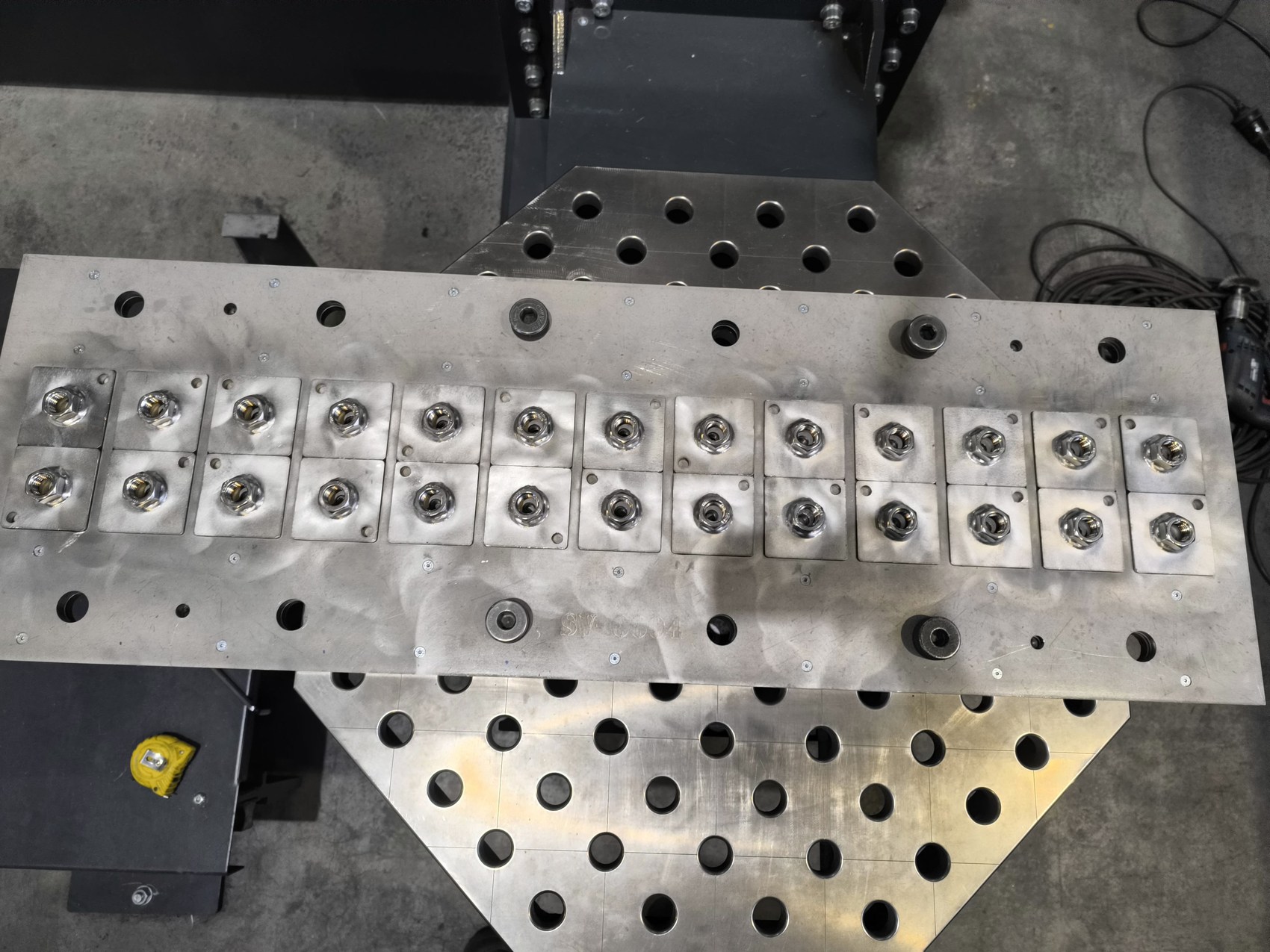
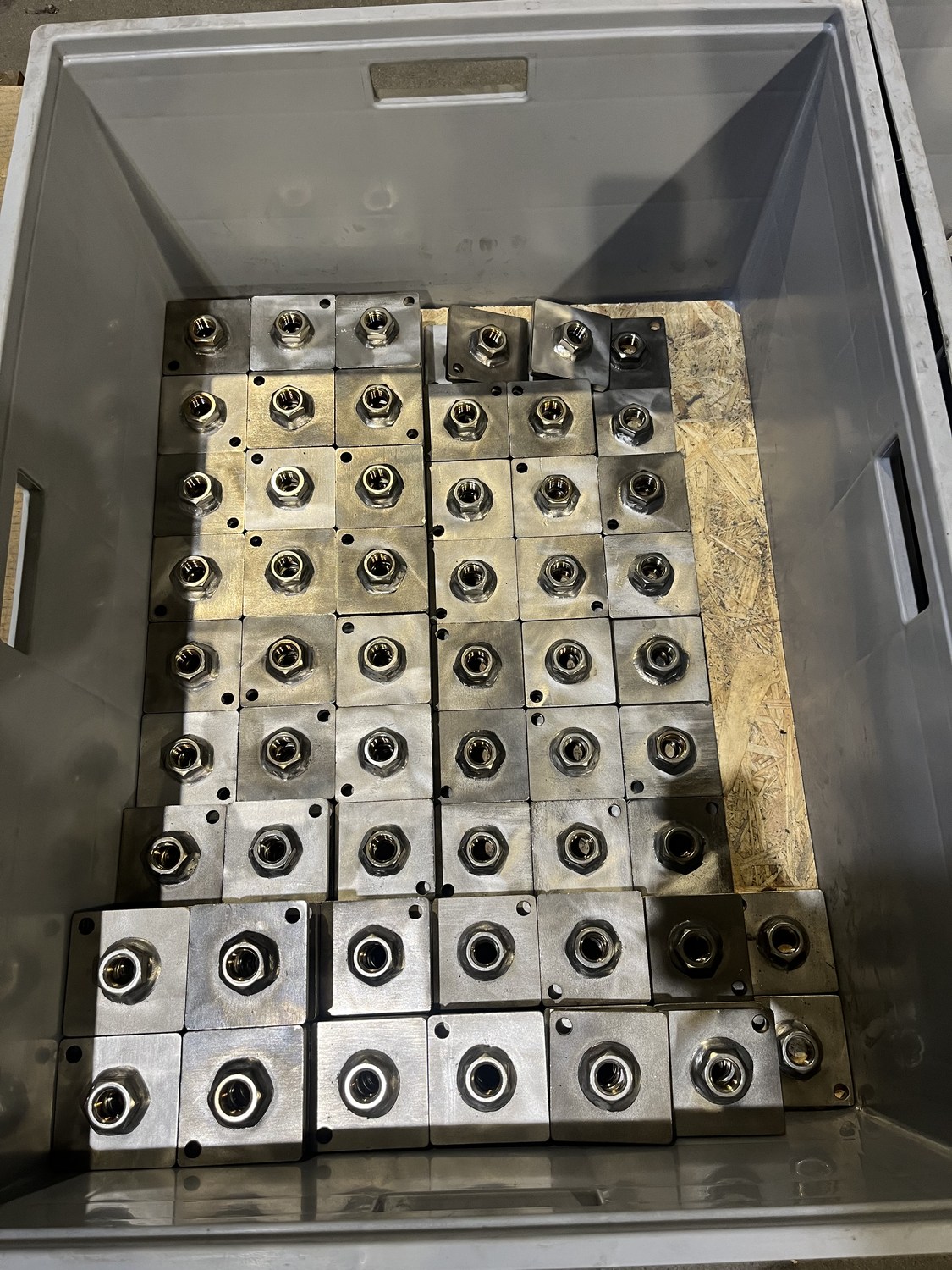
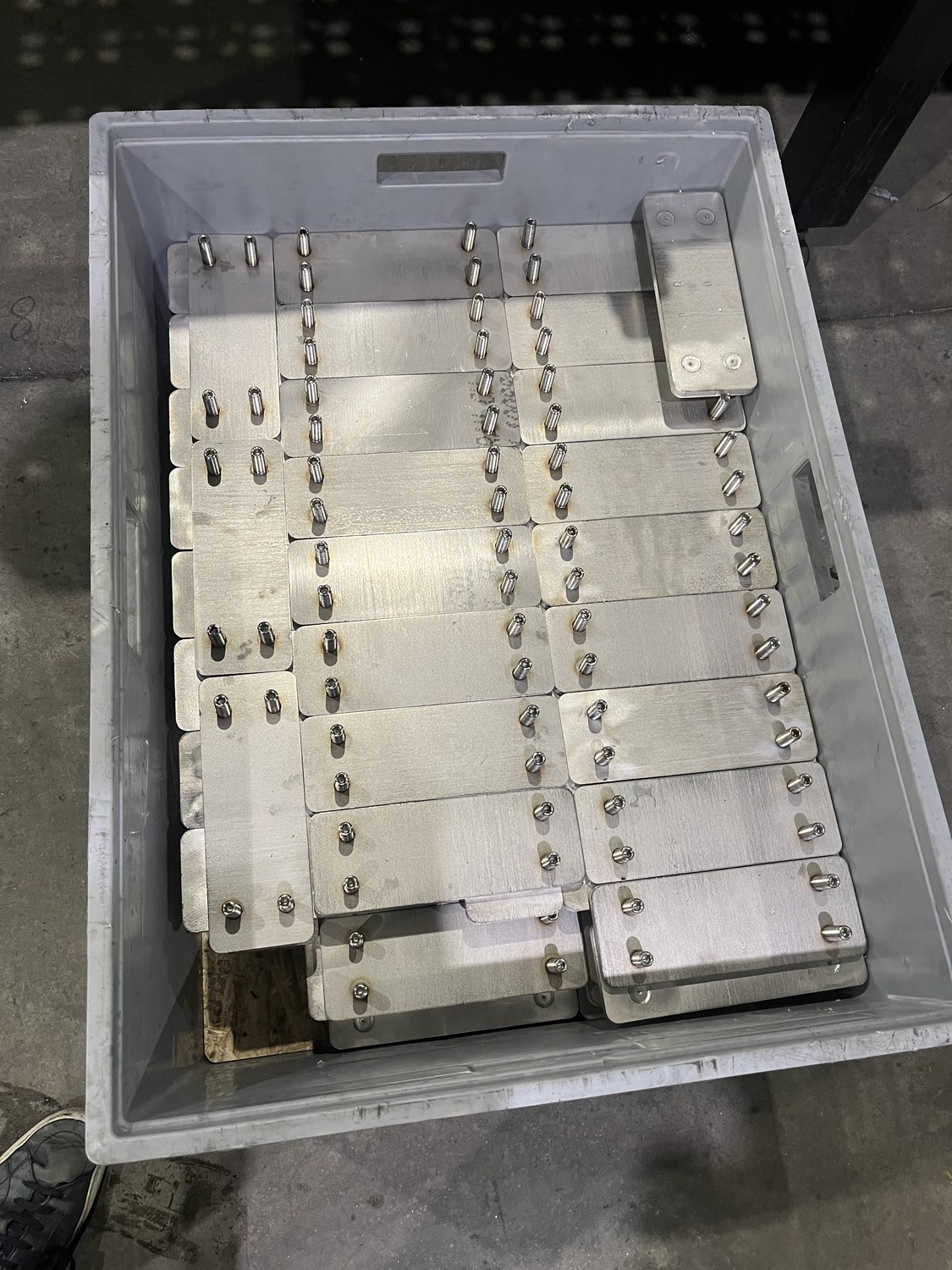
Twenty-six nut plates sit in two rows on the welding table. The fixture holds them in position for the cobot. We use parts like these in many of our stainless steel work platforms and mezzanines. The dimensions, access points and connections are tailored to the plant. Recurring parts such as nut plates, foot plates, gusset plates and lifting lugs are good candidates for robotic welding.
Reliable production starts with the fixture
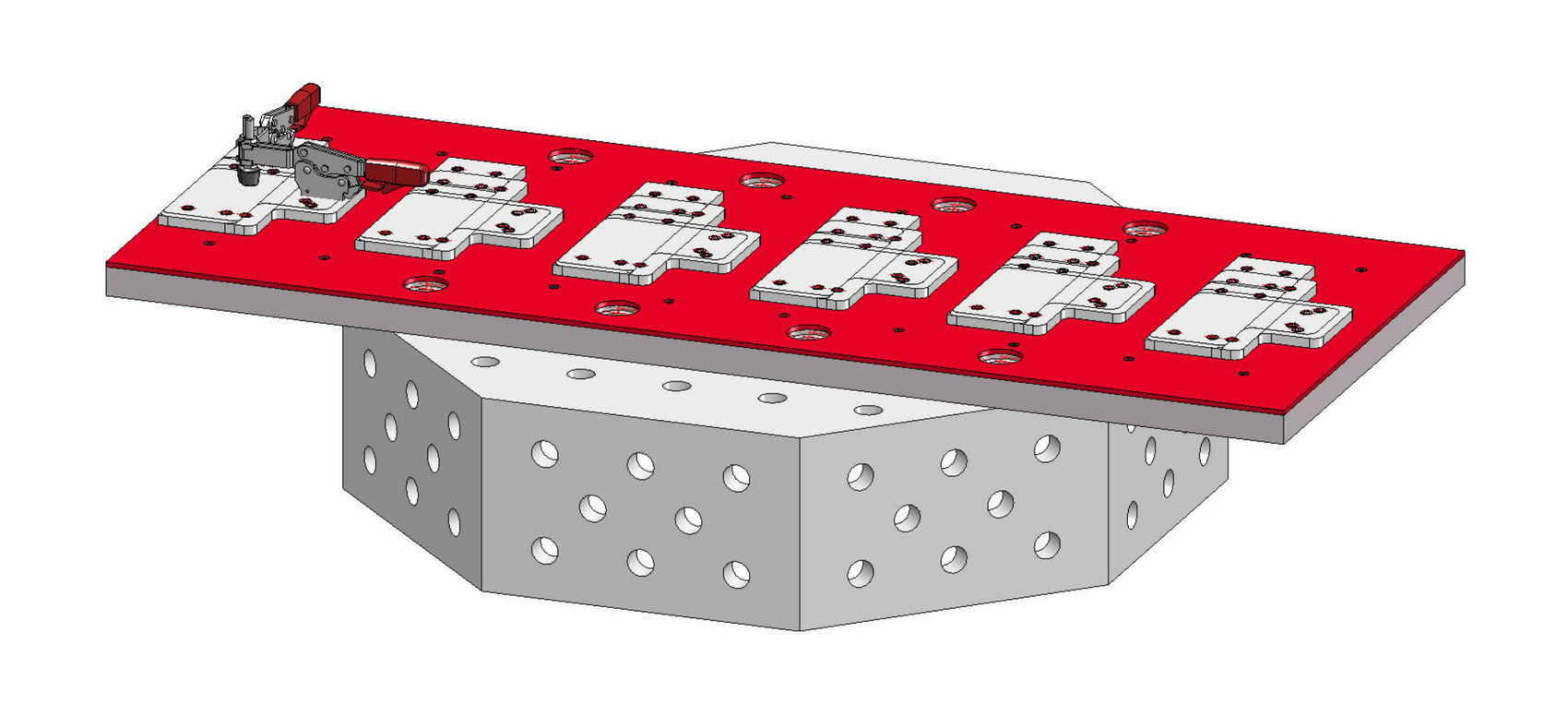
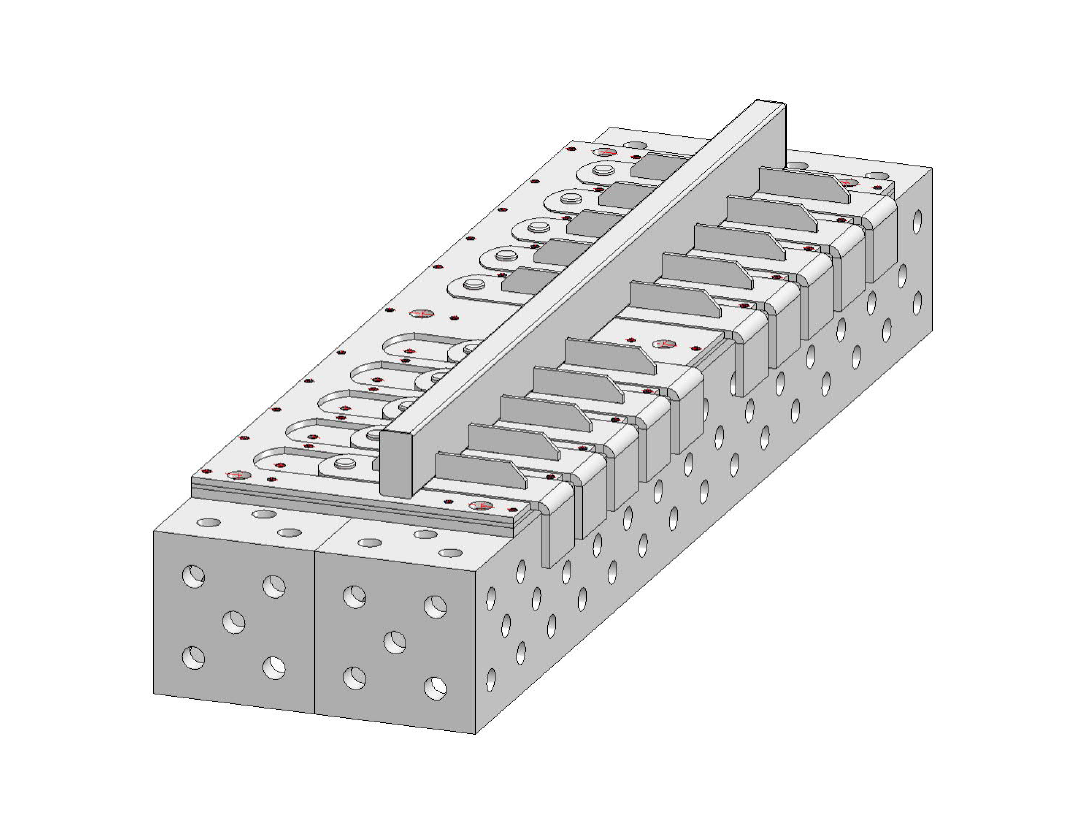
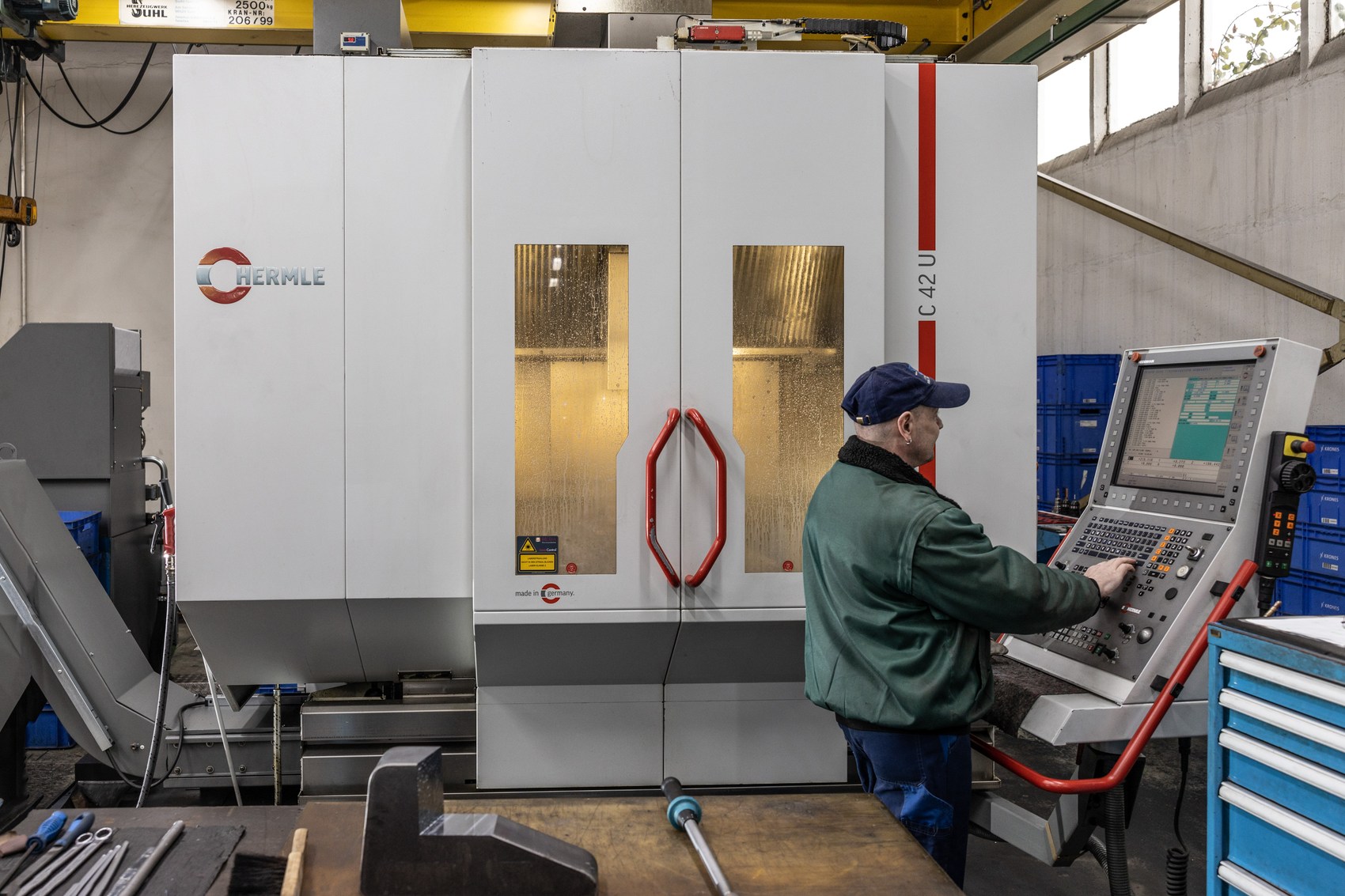
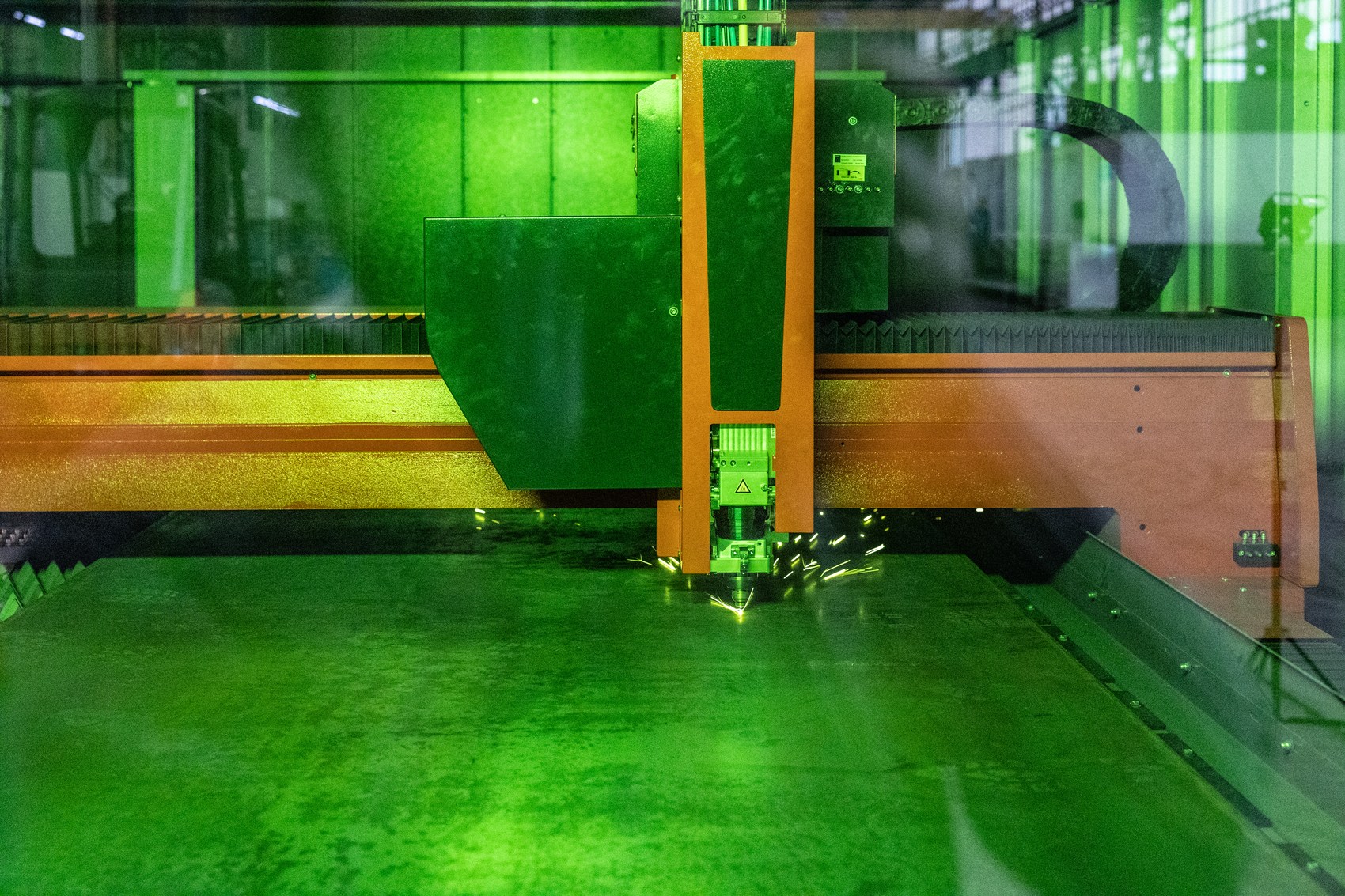
Our design and shop teams work out how to locate the parts and give the torch access to every weld. We design the fixtures in CAD and machine them on our own CNC equipment. When a part changes, we can adapt its fixture in-house in Weimar. Precision laser cutting helps the parts seat properly in the fixture.
Robotic welding in three steps
Load and locate the parts
Stops and locators set the position of each part. Operators can quickly see whether each part is properly seated as they load the fixture.
Program the weld sequence and locate the workpiece by touch
Our welding specialists set up the weld sequence on the cobot. Before welding, touch sensing detects the actual position of the workpiece. The cobot can then adjust its programmed position accordingly.
Test weld samples and run the batch
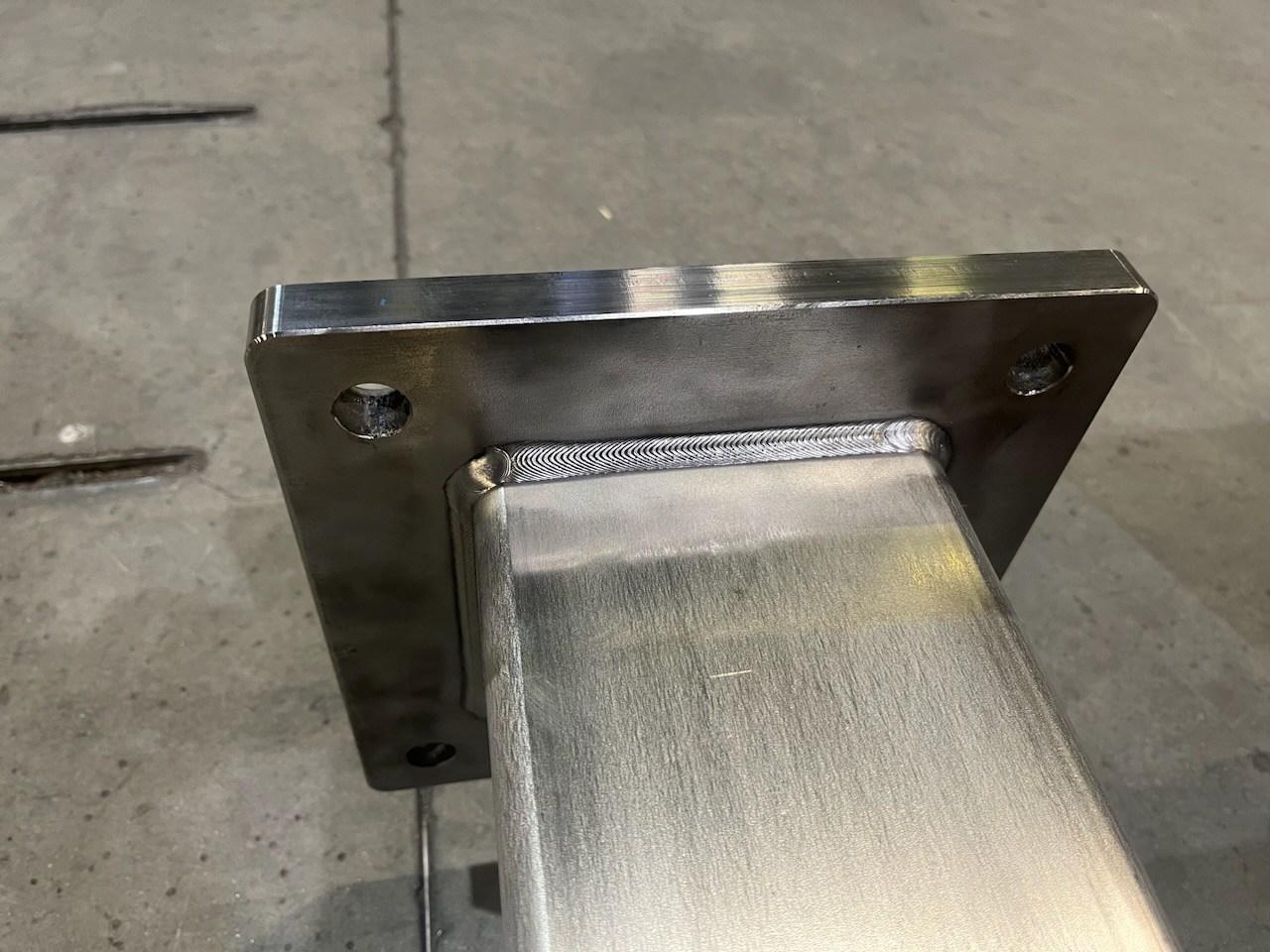
We had samples of the robotic welds tested by a welding institute. Once the process is set up, we can produce hundreds to thousands of parts, depending on the component, with consistent weld quality and appearance.
Less repetitive work, more time for skilled fabrication
Welding large batches of identical plates can mean hours of repeating the same steps. The cobot takes on this work. Our welding specialists set up the process, assess the welds and refine the workflow. They also have more time for jobs where their experience matters most, such as making complex joints in custom frames and assemblies.

Which parts do you make repeatedly?
Bernd Weigmann
Your contact for cobot-welded parts and automation projects.
Send us your drawing, target quantity and weld requirements. We can talk through the best way to make the parts.